What solar panels cost in Nashville, TN
Solar panel cost in Nashville, TN is decided by four numbers, and the square footage of your house is not one of them. This is what each of those numbers is, where to find yours, and which published figures you can check for yourself before anyone sends you a quote.
Published .
Nobody can tell you what solar panels cost in Nashville from a web page, including this one. What we can do is show you the four numbers that decide it, and where each of them is published, so that when a quote lands you can check it instead of trusting it.
A note on what is not below. There is no dollars-per-watt figure on this page. The averages circulating for Tennessee are national numbers with a state label on them, and most of them are quoted net of a federal credit that no longer applies to a purchase. We would rather be short a number than print one we cannot show you the source for.
Square footage is the wrong question
The most-asked version of this is about a 2,000 square foot house, and the honest answer is that floor area barely enters into it.
An array is sized to consumption, not to a building. A 2,000 square foot house with a heat pump, an electric water heater and two people working from home needs a very different system from an identical house standing empty between nine and five with gas heat.
For scale rather than for sizing, the US Department of Energy notes that NREL uses an average system size of 7.15 kilowatts direct current, with a 3 to 11 kilowatt range, for its own analyses (US Department of Energy, checked 2026-08-05).
Before you click that link, one warning about it. The same federal page still carries a tax-credit paragraph written several years ago, and that paragraph is wrong now. We are citing it for the sizing figure and nothing else. For the credit position, use the IRS pages in our guide to the Tennessee solar tax credit in 2026.
The four numbers that decide your price
Your annual consumption, hour by hour. Not your monthly totals. Middle Tennessee Electric tells its members that a good contractor asks for the last twelve months of hourly data, and that a contractor asking only for monthly bills is a reason to move forward with caution (MTE, checked 2026-08-05).
What you pay for power. Nashville Electric Service publishes a residential base rate of 9.254 cents per kilowatt-hour, effective October 2024, plus a fuel cost adjustment it resets every month, listed at 2.610 cents for August (NES, checked 2026-08-14). That second number is the one to look up rather than carry forward: it was 2.803 cents in July. NES also publishes what an average house pays, and it moves with the adjustment: a residential home using 1,000 kWh has a bill of $142.93 (NES, checked 2026-08-14).
What you are paid for what you export. Tennessee differs from almost everywhere else here, and this is the number most quotes get optimistic about. Middle Tennessee Electric tells members that excess generation can be sold to TVA for roughly 2 cents per kilowatt-hour under a Dispersed Power Production contract, and that the contract process takes two to three months (MTE, checked 2026-08-05).
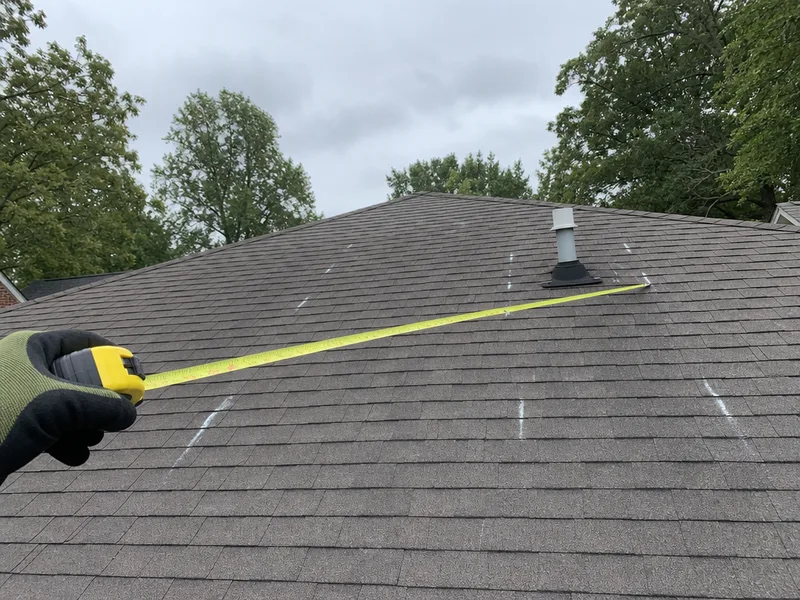
The condition of your roof. A roof with under ten years left turns a solar project into two projects. That is covered below.
The line items nobody puts in the headline number
| Line item | What is published | Publisher, and when we checked |
|---|---|---|
| Metro PV permit | Starts at $75.00, may increase marginally by fixture and equipment type | Metro Codes, checked 2026-08-05 |
| Permit validity | Expires six months after issuance, and work must begin inside that window | Metro Codes, checked 2026-08-05 |
| Residential permit review | Best efforts inside 30 days of submission | Metro Codes, checked 2026-08-05 |
| Utility application on MTE | $0 application, $0 metered-based exchange, $0 additional monthly billing | MTE, checked 2026-08-05 |
| Export contract lead time | Two to three months for the TVA contract process | MTE, checked 2026-08-05 |
| Federal credit on a purchase | Not available for property placed in service after December 31, 2025 | IRS, checked 2026-08-05 |
Two of those rows are schedule rather than money, and they are the ones that cost people. A permit that expires six months after issuance and an export contract that takes two to three months are the same project trying to happen in two different queues.
What the roof does to the number
Metro Nashville notes that the panel weight of a typical residential system is often less than three pounds per square foot, which most residential roof surfaces in good condition can support (Metro Codes, checked 2026-08-05). The operative phrase is "in good condition".
If the shingles have under a decade left, the sensible order is roof first, array second. Doing it the other way means paying to take a working array off and put it back, which is a real job with a real price and is almost never in the break-even projection you were shown. That work is covered on our panel removal and reinstall page, and the reasons it comes up are in our guide to why people get rid of their solar panels.
Payback, without the part that used to do the heavy lifting
Until the end of 2025 a residential buyer could take roughly a third off the price through a federal credit. That is gone for a cash or loan purchase: the IRS states the residential credit is not available for any property placed in service after December 31, 2025 (IRS, checked 2026-08-05).
Nothing about the hardware changed. What changed is that the project now has to pay for itself out of the difference between what you would have bought power for and what the array saves you, with no head start.
That makes self-consumption the whole game here. A kilowatt-hour you use inside your own house is worth what you would have paid for it. A kilowatt-hour you export is worth about a sixth of that. Which is why sizing an array to your actual usage pattern matters more in Tennessee than in a net metering state, and why an oversized system is an expensive mistake rather than a harmless one.
How to compare two quotes without being an expert
Ask both of them for the same four things, in writing:
- The annual production estimate, and the usage data it was built from. Hourly, not monthly.
- What they assumed you would be paid for exported power. Compare it with the figure MTE publishes above.
- Whether the price assumes any tax credit, and which one.
- What happens if the roof needs replacing in five years.
A quote that answers all four is comparable to another quote that answers all four. Two glossy PDFs with a single number on the front are not comparable to anything.
If the array is already on the roof and the bills are the problem, that is a different question with a cheaper answer, and it usually starts at solar panel repair rather than at a new system.